Table Of Content
The exact mechanism that controls passage from one phase into the next is not fully known. Ectodysplasin (EDA) and its receptor (EDAR) are another important pathways involved in the placode stage of hair morphogenesis. The mouse EDAR mRNA is expressed in the epithelium before placode formation, and then becomes restricted to placodes, whereas the EDA mRNA is still expressed even after placode formation [3, 6, 8]. In the placode stage, activated WNT and EDAR control the localized accumulation of sonic hedgehog (SHH), which is essential for the downgrowth of the hair germ [2].
Foods You Didn’t Know Help Your Skin
If you have a lot of baby hairs, be sure to separate them at the front of your face to really define that part. You can always part your hair against its natural predilection—and we certainly encourage switching it up every so often—but be aware that it’s most easily done to go with your natural part. Typically, you should know where this part lies by examining exactly where your hair falls to separate sides. If you need extra help, try locating the rear cowlick of your hair (if you have one); chances are the part starts from this cowlick and moves forward towards your front hairline. Fowler suggests a middle part to add the illusion of roundness to oblong faces. Cavalcante agrees, saying, "A middle part and long layers beautifully complement a naturally elongated face shape."
Informed Health Links
Depending on its physiology and the activity of the structures that we will see below, the hair will have certain properties and a more or less high growth rate. Healthy hair indicates health and youth (important in evolutionary biology). White or gray hair is a sign of age or genetics, which may be concealed with hair dye (not easily for some), although many prefer to assume it (especially if it is a poliosis characteristic of the person since childhood). Although pattern baldness can be slowed down by drugs such as Finasteride and Minoxidil or treated with hair transplants, many men see this as unnecessary effort for the sake of vanity and instead shave their heads. In early modern China, the queue was a male hairstyle in which the hair at the front and top was shaved every 10 days in a style mimicking pattern baldness, while the remaining hair at the back was braided into a long pigtail.

Dr. Marc Dauer on Good Morning America
This part is usually great for those with square face shapes or diamond face shapes, as it shows off the angles of your face. The middle part has gained popularity in the past few years and is the quickest and easiest way to part your hair. This part is great for those with round faces, as it allows the hair to flow evenly on both sides of the face, elongating it. When wearing a middle part, you can have your hair flirty and loose in soft waves like Stephanie, or go for the high fashion look and slick down your hair with hairspray into a low ponytail.
Gen Z vs. millennials: Why TikTok hates skinny jeans and side parts - Vox.com
Gen Z vs. millennials: Why TikTok hates skinny jeans and side parts.
Posted: Tue, 16 Feb 2021 08:00:00 GMT [source]
Does the Hair Structure Anatomy Affect Your Hair Growth?
Some small, limited studies have found that certain supplements and shampoos could be helpful, dermatologists say. However, your best bet if you’re suffering from hair loss is to see a board-certified dermatologist who can determine what’s causing your alopecia and then recommend a treatment plan. A variety of treatments have been developed to help regrow hair and thicken existing hair on patients with alopecia, dermatologists say.
Celebrities With Middle Parts - Celebrity Hair Middle Part Photos - ELLE
Celebrities With Middle Parts - Celebrity Hair Middle Part Photos.
Posted: Wed, 16 Nov 2022 08:00:00 GMT [source]
Pattern Wide Tooth Comb
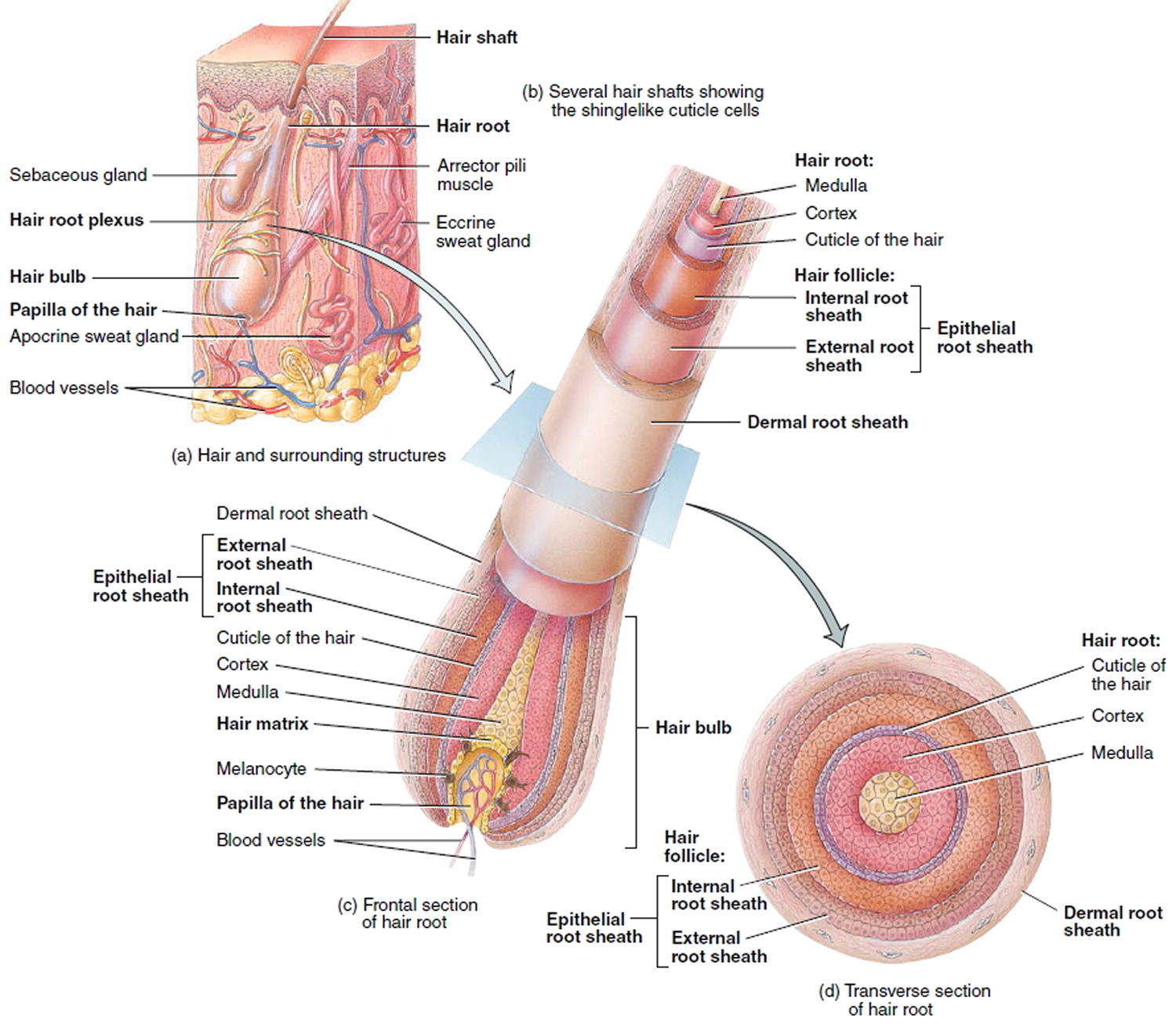
Lineage studies have proven that bulge cells are multipotent and that their progeny generate the new lower anagen hair follicle [21]. One of the most distinguishing features of stem cells is their slow-cycling nature, presumably to conserve their proliferative potential and to minimize DNA errors that could occur during replication. On entering the hair bulb matrix, they proliferate and undergo terminal differentiation to form the hair shaft and inner root sheath. They also migrate distally to form sebaceous glands and to proliferate in response to wounding [16, 20, 22]. In the second stage of development, hair germ elongates into a cord of epithelial cells and forms the hair peg (stages 3 and 4). It is surrounded by mesenchymal cells that eventually transformed to the fibrous sheath.
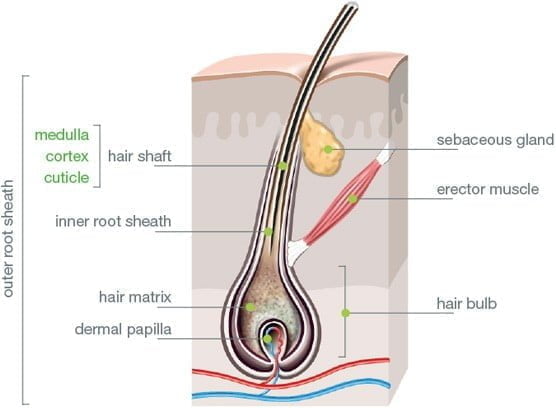
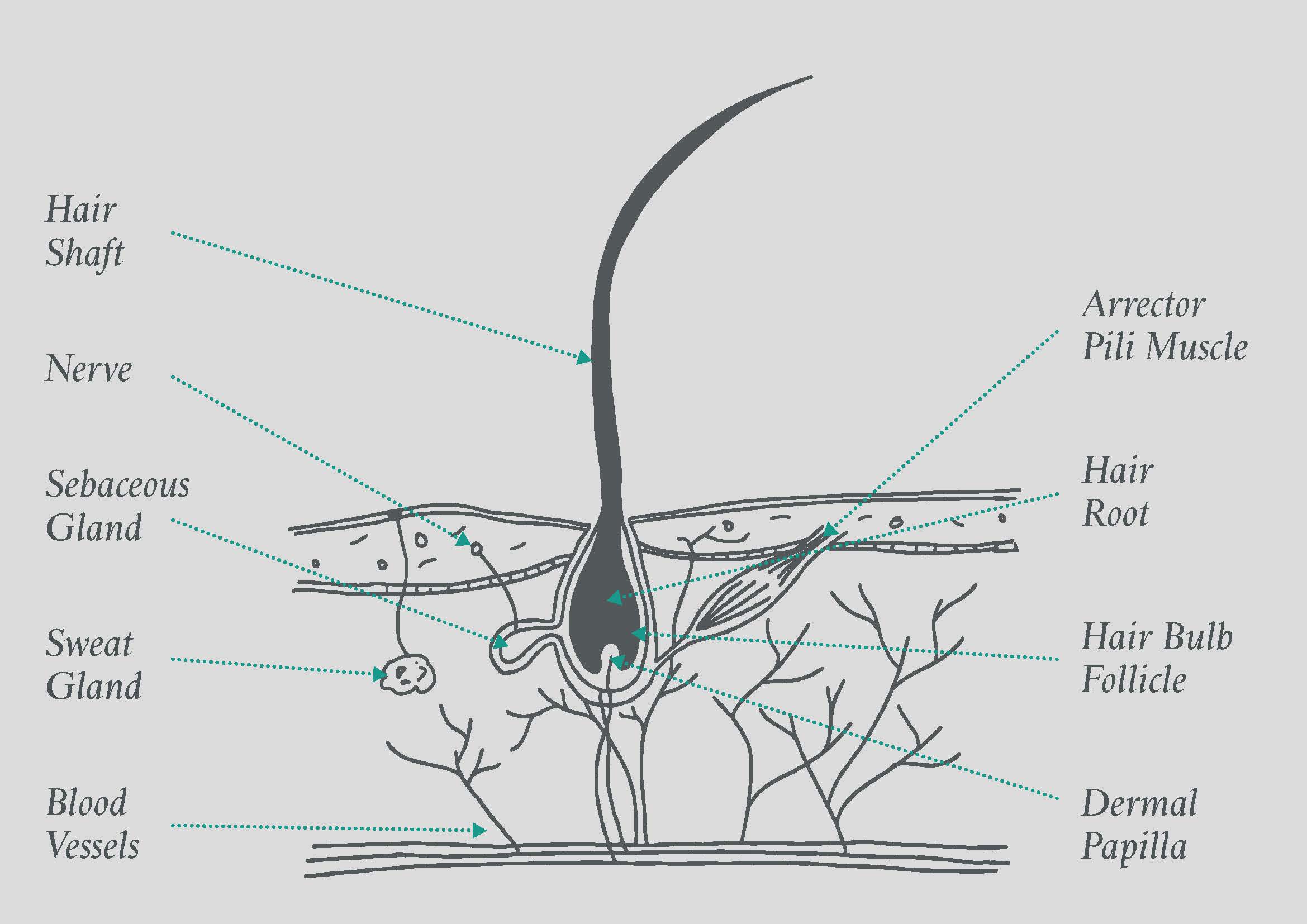
Although, you don't necessarily have to brush your hair to determine your natural part. Says Francis, you can also take a look at your hairline and find which direction your hair grows out of the follicles. "If you see the hair going toward one side at the hairline, that is also an indicator of what side your hair favors," he explains. Some people have curly corkscrew hair, while others have thick, straight, shiny hair. The arrector pili muscle, a tiny bundle of muscle fiber, is attached to the outer sheath.
Try eliminating harsh and harmful chemical products (including shampoos, gels, sprays, etc.) to reduce damage and breakage in the hair shaft. By eliminating or reducing these detrimental habits, your hair will be more easily able to thrive and grow. The sebaceous glands produce sebum, which is an oily substance to moisturize the hair shaft. Dermal papilla makes the hair bulb base and contains a massive vascular network that provides nutrients to nourish it. Although the main function of the dermal papilla is blood supply, it also receives signals from hormones to regulate hair growth. How much of each hair type you have varies from person to person and also depends on your age and sex.
Hair loss, or alopecia, affects more than 80 percent of men and 50 percent of women, and the risk increases with age. The eyebrows provide moderate protection to the eyes from dirt, sweat and rain. They also play a key role in non-verbal communication by displaying emotions such as sadness, anger, surprise and excitement. In many other mammals, they contain much longer, whisker-like hairs that act as tactile sensors.
Fine hair is difficult to feel or it feels like an ultra-fine strand of silk. Hair grows everywhere on the external body except for mucus membranes and glabrous skin, such as that found on the palms of the hands, soles of the feet, and lips. Hair has many areas of clinical significance, which include diseases of hair loss, excess, alterations due to nutritional deficiencies, infectious causes, and effects of drug reactions. In summary, the formation of placodes in response to the first dermal signal involves activation of EDA/EDAR signaling in the epithelium, followed by epithelial WNT signaling, and subsequent activation of BMP signaling. The actions of EDA/EDAR and WNT promote placode formation, whereas BMP signaling represses placode fate in adjacent skin [6].
When the body is too cold, the arrector pili muscles found attached to hair follicles stand up, causing the hair in these follicles to do the same. These hairs then form a heat-trapping layer above the epidermis. The opposite actions occur when the body is too warm; the arrector muscles make the hair lie flat on the skin which allows heat to leave. The first to develop is the lanugo, a layer of downy, slender hairs that begin growing in the third or fourth month of fetal life and are entirely shed either before or shortly after birth. During the first few months of infancy there grow fine, short, unpigmented hairs called down hair, or vellus. Vellus covers every part of the body except the palms of the hands, the soles of the feet, undersurfaces of the fingers and toes, and a few other places.



No comments:
Post a Comment